What You Can't Throw Away in Colorado (and Where It Actually Goes)
8 min read · Updated 2026-11-12
Almost everything in a garage, basement or spare bedroom can go in the back of a truck and straight to a transfer station. A short list of things cannot — and getting that list wrong is how people end up with a tagged curb, a rejected load at the scale, or a donation center turning them away in the parking lot. Here is the Colorado disposal list in plain language: what can't go in your trash, why, where each item actually belongs, and what a hauling crew is and isn't allowed to put on the truck.
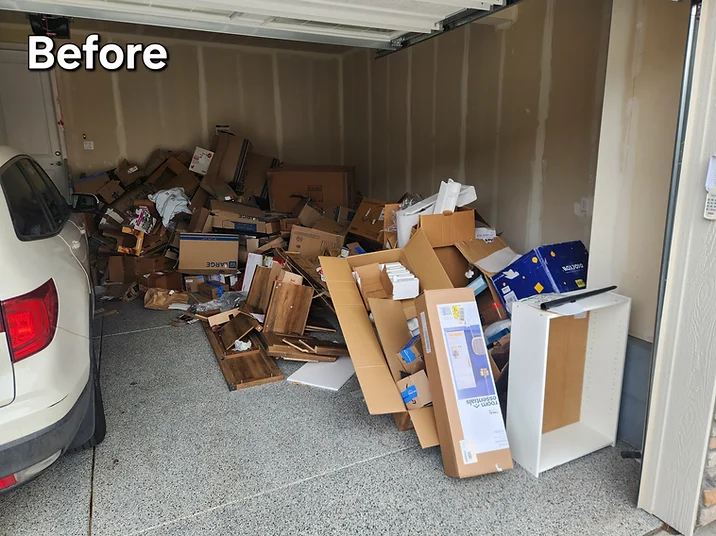
The short version: nine things that can't go in the trash
If it is on this list, it does not belong in a curbside cart, a dumpster or the bed of a hauler's truck. Every item here has a proper destination somewhere on the Front Range — it just isn't the bin.
- Paint, latex or oil-based. Liquid paint is banned from most landfills and can't be dried out and dumped like trash.
- Pesticides, fertilizer, pool chemicals and weed killer. Household hazardous waste, full stop.
- Propane cylinders, gas cans and leftover fuel. Pressurized and flammable — an exchange at a retailer handles empty cylinders, and the county handles the rest.
- Tires. Whole tires are refused curbside almost everywhere because of fire and mosquito risk.
- Car batteries and lithium batteries. A fire risk inside a collection truck and at the facility.
- TVs, monitors and computers. Heavy metals, plus a statewide electronics recycling program that keeps them out of the landfill.
- Refrigerators, freezers, AC units and dehumidifiers. Anything holding refrigerant has to have the gas recovered first.
- Mattresses and box springs. Bulky, hard to compact, and refused by most curbside programs and nearly every donation center.
- Asbestos, lead paint debris and ash from treated lumber. Health hazards that need a licensed abatement contractor, never a dumpster.
If an item is not on this list and is not obviously hazardous, a hauler can almost certainly take it. Furniture, appliances without refrigerant, carpet, lumber, fencing, yard debris, shelving, exercise equipment, hot tubs and shed teardowns are all routine loads.
Where each item actually goes
This is the table we wish every customer had before they started loading. Destinations vary by county and by facility, and the rules do change, so treat this as the map rather than the final word.
| Item | Why it's restricted | Where it goes instead |
|---|---|---|
| Paint, stains, solvents | Liquid waste, flammable, banned from landfills | County household hazardous waste drop-off |
| Pesticides, fertilizer, pool chemicals | Toxic to water systems and collection crews | County household hazardous waste program |
| Propane cylinders, gas cans, fuel | Pressurized and flammable in a compactor | Retailer cylinder exchange, or county HHW |
| Tires | Fire risk, mosquito breeding, refused curbside | Tire retailer or a county collection event |
| Car and lithium batteries | Fire risk in trucks and at the facility | Auto parts store or county HHW |
| TVs, monitors, computers | Heavy metals; statewide e-waste program | Certified electronics recycler or a hauler |
| Fridges, freezers, AC units | Refrigerant must be recovered by a qualified handler | Appliance recycler or a haul-away crew |
| Mattresses and box springs | Won't compact; refused by most programs | Mattress recycler or a haul-away crew |
| Furniture, carpet, lumber, fencing | Bulky, not hazardous | Donation first, then recycling, then disposal |
| Yard debris, brush, sod, rock | Too heavy or bulky for curbside carts | Compost site, transfer station or a hauler |
| Hot tubs, sheds, decks | Mixed materials, need disassembly | Light demo and haul-away |
| Asbestos, lead debris, treated lumber ash | Health hazard | Licensed abatement contractor |
Two minutes on the phone with your county waste office settles the last mile of any of these faster than any guide, this one included. Boulder, Weld, Adams, Jefferson, Larimer and Broomfield counties each run their own household hazardous waste days, with their own hours, residency rules and accepted items.
What a hauling crew can take — and what stays off the truck
People often assume a junk removal company can take anything, which is why the paint cans end up in the first pile. A licensed hauler can't legally put hazardous waste in a truck either, so a reputable crew will sort those out before anything is loaded and tell you where to take them.
- Furniture, mattresses, carpet, shelving and exercise equipment — yes, in any condition
- Appliances with refrigerant — yes, handled through a certified recycler
- Electronics and TVs — yes, through a certified e-waste facility, with a small disposal fee attached
- Construction debris, fencing, pallets and lumber — yes
- Yard debris, brush, sod and rock — yes
- Hot tubs, sheds and light demo — yes, drained and dismantled
- Full property and estate cleanouts — yes, sorted as we load
- Paint, chemicals, propane, tires, car batteries and asbestos — no, and any hauler that says yes is a problem
If you are not sure which side of that line an item falls on, text a photo to 720-333-3497 and we will tell you straight — including the cases where the honest answer is that a donation center or the county will take it for free.
Colorado rules that change the plan from town to town
Disposal in Colorado is local. There is no single statewide answer for bulky items, which is why a couch can be a scheduled pickup in one town and a code violation twenty minutes down the road. The Front Range splits along county lines: the Boulder County towns and the Weld County towns run their bulky-item and yard waste programs differently, with different dates, item limits and placement rules.
In Boulder and Denver, alleys add a second layer. Leaving furniture behind a rental is traceable back to the address, and code complaints move faster than most people expect during a move-out week. In any city, an item left on the curb on an unscheduled day is illegal dumping, not a pickup request.
Weather is the third factor. Wet cardboard and soaked upholstery double in weight, and frozen debris in January is much harder to move than the same pile in October. If a pickup can happen before the first hard freeze, it is cheaper and faster.
And HOAs are everywhere on the north side of the metro. A driveway pile visible from the street for a week is the fastest way to get a letter, which is exactly why a one-visit haul beats a pile that waits for a weekend that never comes.
Donate first — but call before you load
Reuse is the best outcome for anything still functional, and it costs nothing to try. Thrift stores, furniture banks and shelter programs take dressers, tables, bookcases, chairs and clean upholstery, though most are strict about stains, smoke smell, pet damage and anything that has spent time outside.
Call and describe the item honestly before you load it: age, condition, whether it came from a smoking or pet household. Ask two questions — do you take this today, and do you take it at this hour — because donation doors close when floor space fills up. Showing up with a sectional at the wrong time is a wasted trip and an item you now have to move twice.
What never gets donated: mattresses, stained or torn upholstery, anything broken, and anything with pest damage. Those go to recycling or disposal, and pretending otherwise just moves the problem to a volunteer's parking lot.
The five-minute prep that makes any pickup go smoothly
Small things on your end save real time on the day, whether you hire a crew or borrow a truck.
- Separate the hazardous stuff first. Paint, chemicals, propane, batteries and tires into their own pile, then call your county about that pile.
- Mark what stays. A strip of tape or a note on the furniture you are keeping prevents the single worst kind of mistake.
- Put the pile where the truck can reach it. A garage or driveway load is faster and cheaper than a back-bedroom load.
- Send photos with scale. A garage door, a couch or a standard trash can in frame tells a hauler the volume in one glance.
- Mention stairs, gates and parking. Access is part of the job, and it is better quoted up front than discovered on arrival.
Do those five things and a quote becomes accurate the first time, whether it is a single mattress in Erie or a full garage cleanout in Longmont.
Frequently asked questions
- Can I put a mattress in my trash can in Colorado?
- No. A mattress won't fit, won't compact, and most Front Range curbside programs refuse them. A mattress recycler or a mattress disposal crew is the realistic route, and recycling keeps the steel, foam and fabric out of the landfill.
- Can I put a couch on the curb in Colorado?
- Only on a scheduled bulky-item day for your city, and only if you follow its placement rules. On any other day it's illegal dumping — you can be tagged or fined, and an HOA can send a letter. If a pickup date is weeks out, a haul-away crew is usually faster.
- Where do I take old paint in Colorado?
- Your county's household hazardous waste program. Boulder, Weld, Adams, Jefferson, Larimer and Broomfield counties each run their own drop-off days and residency rules, so check the current schedule before you load the car. Paint never goes in a dumpster, and a hauler can't take it either.
- Can I put an old refrigerator on the curb?
- Generally no. Refrigerant has to be recovered by a qualified handler before a fridge, freezer or AC unit is recycled, so curbside collection and most landfills won't accept one. An appliance removal crew handles the recovery and the metal recycling in one trip.
- Can a junk removal company take everything?
- No, and a crew that says yes is worth avoiding. Hazardous waste, paint, chemicals, propane, tires, car batteries and asbestos stay off the truck for legal and safety reasons. Furniture, appliances, electronics, yard debris, construction debris and full cleanouts are all routine.
- How does junk removal get priced in Colorado?
- By how much room the load takes up in the truck, how heavy it is, and how far it has to be carried — not by which town you live in. Text photos to 720-333-3497 with the floor the items are on and anything unusual about access, and you'll get a firm quote before anything is lifted.
Skip the work — have it hauled
Not sure where something goes? Text a photo to 720-333-3497 and we'll tell you straight — then haul everything we're allowed to across Erie, Boulder County, Weld County and the north Denver metro.